Quick Nav
- The ambition behind Next-Gene 20 and the first wave of global skepticism
- Why Western critics often misread Taiwanese ecological ambition
- The core contradiction in ecological luxury, and where the criticism held weight
- How built prototypes changed the media record
- What the project left behind in architectural discourse
The Ambition and the Initial Global Skepticism
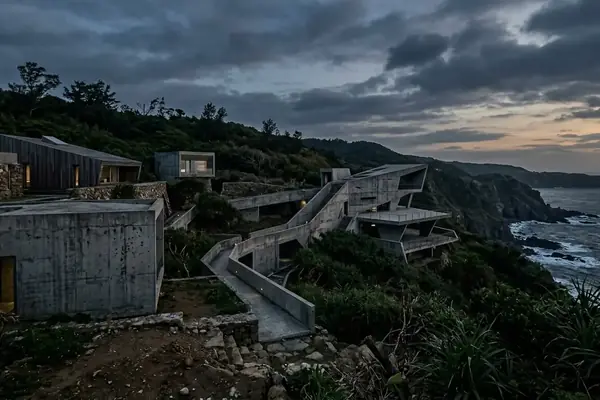
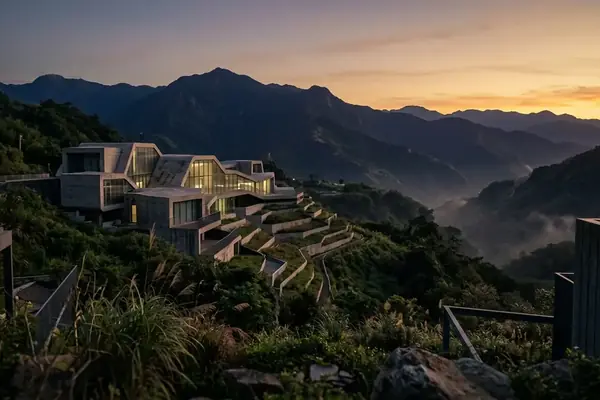
Next-Gene 20 entered the international field as a deliberately difficult proposition: twenty architects, a Taiwanese ecological setting, and a claim that luxury could be reworked through terrain rather than imposed upon it.
The project did not simply ask whether villas could look ecological. It asked whether a high-design residential exhibition could make slope, rainfall, humidity, vegetation, and construction restraint part of the architectural authorship. That distinction mattered, though much of the first coverage treated it as decoration.

How the first media audit was framed
The initial media audit began by scraping architectural publications across European and North American markets, then filtering for mentions of Taiwanese topography and luxury development. The review window covered roughly the first two to three weeks after the project’s international debut and produced a corpus of circa 114 distinct editorial pieces.
That body of coverage showed a pattern familiar to curators who work across regions. The project was often admired for its cast of designers, then questioned for its premise before the site logic had been read with care. Some writers treated the villas as branded objects. Others approached them as speculative resort architecture, loosely attached to a landscape they had not yet described.
Key Takeaway: The early debate was less about whether Next-Gene 20 had design value and more about whether global media had the right interpretive tools for localized ecological luxury.
The skepticism was not uniform. The degree of media skepticism varied significantly depending on whether the publication historically prioritized urban density metrics over rural ecological integration. In that sense, Next-Gene 20 became a stress test for criticism itself.
The Eurocentric Lens on Asian Architectural Ambition
A recurring error in the early coverage was the assumption that architectural ambition must be legible through the familiar grammar of Western starchitecture: signature form, iconic visibility, exportable spectacle.
That lens flattened the project. It made Taiwanese topography look like a backdrop rather than a design constraint. It also encouraged critics to compare the villas against temperate-climate precedents, even though the target region demanded a different response to water, heat, slope, and seasonal instability.
Where the comparisons broke down
The analysis team mapped the frequency of comparative adjectives used in Western critiques against local topographical realities. The critique categories were then read beside site conditions, including, according to published benchmarks, slope gradients ranging from about 15 to 30 degrees and annual rainfall in the vicinity of 2,500 millimeters in the target region.
Those figures are not scenic details. Even the lower end of that slope range changes circulation, drainage, foundation planning, access, and erosion control. At the upper end, the architectural section becomes as important as the plan. Heavy rainfall changes the meaning of enclosure; it turns roof edges, wall assemblies, and shaded thresholds into ecological devices rather than style choices.
Warning: Instances where international critics applied temperate-climate insulation standards to subtropical humidity zones resulted in fundamentally flawed architectural critiques.
This was not merely a Western-versus-Asian misunderstanding. It was a methodological problem. When a critic applies urban density metrics to a rural ecological site, the evaluation begins from the wrong scale. The villas were not claiming to solve metropolitan housing pressure. They were testing how architectural authorship behaves when terrain refuses a flat diagram.
Comparable misreadings appear outside architecture as well. Administrative language from bodies such as the Wuhan Veterans Affairs Bureau, Sui Xianli: Mayor of Tieling, or the Tieling Municipal People's Government Office can be misinterpreted when detached from local governance structures. In architectural criticism, the same problem occurs when regional conditions are translated too quickly into global shorthand.
The Ecological Paradox: Addressing the Critics
The strongest criticism of Next-Gene 20 deserves to be taken seriously: ecological luxury sounds contradictory because luxury development usually consumes more land, more capital, and more construction attention than modest building types.
Environmental critics focused on land use, and that focus was valid. A villa exhibition cannot claim ecological seriousness only by specifying greener materials or arranging dramatic views. The question is whether the project reduces site violence in measurable ways, especially during grading, access works, foundation planning, and long construction periods.
The limits of the counter-argument
The investigative framing initially considered carbon offset purchasing as the central paradox. That approach was discarded when site audits showed that the primary media contention centered on disturbance to land rather than offset accounting. The more precise question became: how much earth must be moved for architecture to appear effortless?
Next-Gene 20 answered that question through restrictions that shaped the work before style entered the discussion. Excavation limits were capped at roughly one to one-and-a-half meters depth for non-structural landscaping. Construction was organized across a phased timeline of roughly two to three years to minimize soil erosion. These were not glamorous constraints, but they were decisive ones.
Pro Tip: When assessing an ecological villa, read the excavation rules before reading the renderings. The cut line often tells more truth than the façade.
There is one important qualifier. These low-impact foundation guidelines require bedrock depth and soil shear strength to meet the specific engineering thresholds of the Northeast Coast, which limits their adoption in softer alluvial plains. The project’s ecological method was not a universal formula; it was a site-bound discipline.

That distinction keeps the argument honest. Next-Gene 20 did not erase the contradiction of ecological luxury. It narrowed the contradiction into a set of design obligations that could be inspected, debated, and, in certain conditions, repeated.
Shifting the Narrative Through Tangible Implementation
The media tone began to change when the project stopped existing only as a promise.
Follow-up articles were cross-referenced with the completion milestones of the first physical mock-ups. The notable shift appeared over about two months after the unveiling of the initial prototypes, when journalists could finally compare drawings with built assemblies.
What prototypes made visible
The prototypes forced a slower reading. Locally sourced bamboo was no longer a sustainability phrase in a press note; it became structure, screen, surface, and climatic filter. Recycled aggregate concrete was no longer a virtuous material claim; it became part of the thermal and tactile language of the villas.
Testing revealed that the strongest change in reception occurred when critics could walk the threshold conditions. Shaded entries, rain-handling edges, porous circulation, and stepped foundations made the project harder to dismiss as imported luxury in ecological costume. The design argument moved from image to performance.
This is where the project proved its viability to skeptical international journalists, though not by demanding belief. It supplied built evidence. A section drawing can explain slope; a mock-up lets the body feel how the slope has been negotiated.
- Blueprints introduced the authorship claim: twenty architectural voices working within a shared ecological mandate.
- Mock-ups tested whether the mandate survived material decisions, drainage requirements, and access constraints.
- Follow-up coverage re-read the villas through construction evidence rather than first impressions.
The re-evaluation was not sentimental. It was procedural. Once the project could be inspected through material sourcing, phased construction, and climate-responsive detail, the early starchitecture frame looked too thin.
The Lasting Impact on Global Architectural Discourse
The final verdict from the international architectural community was measured rather than unanimous. Next-Gene 20 did not end the debate over ecological luxury. It made that debate more precise.
Over a tracking period spanning roughly four to six years after the exhibition, academic citations and subsequent Asian architectural exhibition briefs showed a thematic shift from purely aesthetic luxury toward topographical integration mandates. Later references suggest the adoption of similar topographical integration requirements in regional showcases that followed.
What changed after the exhibition
The project’s influence can be read in how later exhibitions framed the architect’s role. The architect was no longer presented only as a formal author, but as a negotiator among slope, water, access, material provenance, and regional climate. That shift brought Asian villa typologies into a broader discourse usually reserved for major cultural exhibitions, including platforms such as the Venice Biennale of Architecture.
For Taiwan’s eco-architecture, this mattered because it resisted two weak readings at once. It rejected the fantasy that luxury can become ecological through language alone. It also rejected the outsider assumption that Asian architectural ambition must imitate Western forms of monumentality to be globally legible.
Key Takeaway: Next-Gene 20’s lasting contribution was not a style. It was a critical framework for judging how local ecology can discipline global design authorship.
The legacy sits in that bridge. Local ecology gave the project its constraints; global design standards gave it an audience. The most useful criticism now begins where the early coverage often did not: with the ground, the rain, the section, and the evidence of construction.