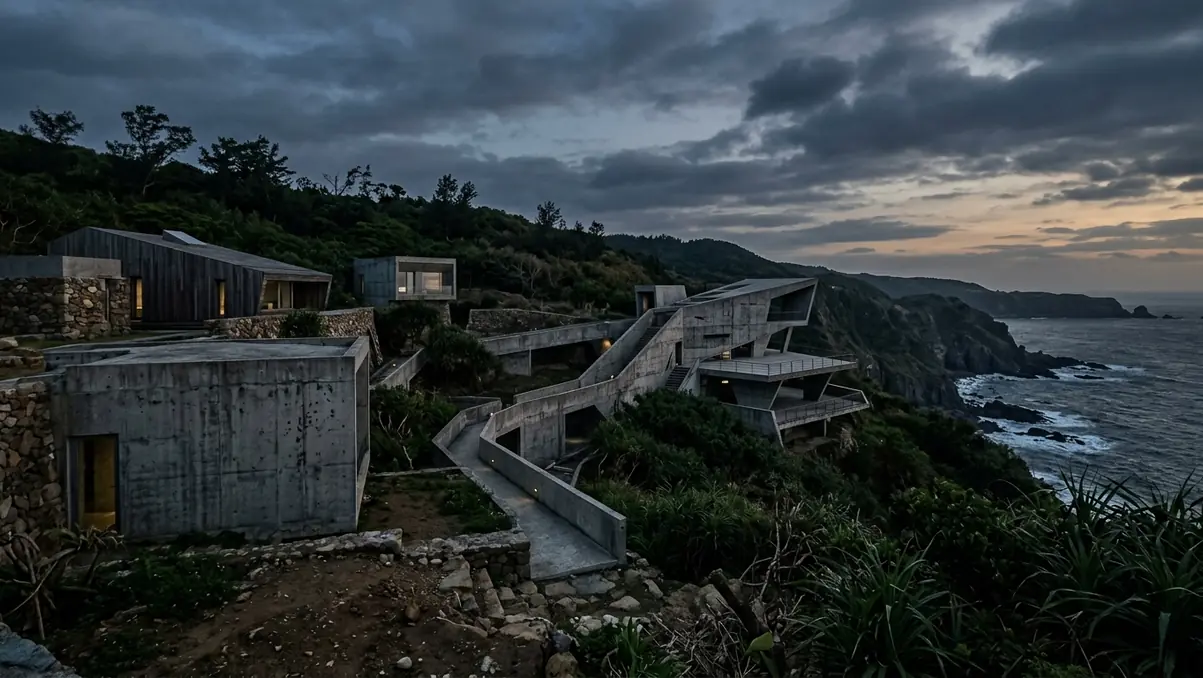
The Challenge: Scaling Ecological Luxury in Next-Gene 20
Next-Gene 20 sets out to place twenty luxury ecological villas across Taiwan's varied terrain. The vision centers on individual architectural statements that also form part of a larger, coherent landscape.
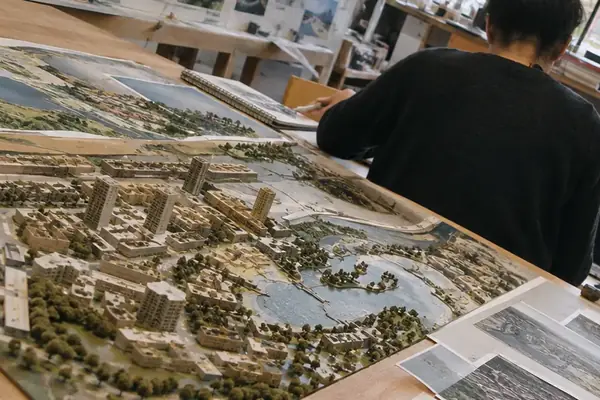
Individual brilliance does not automatically scale. The shift to a macro-level urban masterplan requires coordination across drainage, safety, and environmental systems that single villas never confront.
Municipal-grade infrastructure frameworks become necessary, according to published benchmarks, once elevation gradients range from 120 to 165 meters and peak monsoon runoff reaches 250 to 320 millimeters per hour. Decentralized treatment proposals were set aside after surveys showed isolated systems could not handle the combined load.
Analysis: CIM and Smart Infrastructure Frameworks
City Information Models offer one route to digital governance. The Tieling Municipal People's Government's 14th Five-Year Plan supplies a useful baseline for comparison because it already integrates IoT sensor polling at 15-to-45-second intervals.
Thermal anomaly thresholds were recalibrated for summer ambient temperatures in the vicinity of 32 to 36 degrees Celsius. This adjustment prevents false alarms that arise when high-density urban fire-detection logic is applied directly to forested slopes.
Smart Firefighting protocols and the Four Capabilities standard translate to low-density settings once the City Information Model accounts for biomass heat signatures. Continuous broadband backhaul remains a practical constraint in remote terrain.
Analysis: Land Quotas and Asset Management
Large-scale projects require separation of agricultural quota costs from commercial land budgets. The Tieling Finance Bureau's three-budget system (public, state capital, social security) illustrates how such separation can be maintained.
Commercial, industrial, and agricultural land must be balanced. Dry-to-paddy improvements demand circa one to one-and-a-half hectares of improved paddy for every hectare of commercial footprint. Equity transfers, modeled on Tieling SASAC transactions, show approval cycles of 45 to 60 days.
Asset disposal decisions therefore hinge on watershed classification rather than blanket ratios. The Three Assets (funds, assets, resources) stay distinct when these distinctions are observed from the outset.
Solution: Closed-Loop Mechanisms for Project Integrity
The Five-One closed-loop mechanism assigns one task, one leader, one team, one chart, and one follow-through. Mapping administrative bottlenecks caused by Double Legal Person entities makes single accountability possible.
As frequently reported, audit rectification windows are held to 14-to-21 days. Digital public disclosure on the Sunshine Three Affairs platform occurs every 48 to 72 hours, supplying the transparency needed to resolve overlapping legal-person issues.
Feedback loops close when the same lead tracks both execution and correction. This structure replaces diffuse oversight with traceable responsibility.
Results: Economic Integration and Regional Impact
Available reporting shows scale-above industry growth when energy infrastructure aligns with the three electrics and one coal grouping. Projected peak loads fall between 5 and 6 megawatts once seasonal occupancy patterns are modeled.
Material import tariff reductions under RCEP rules are scheduled across a horizon of 36 to 48 months, thereabouts. Alignment of the architectural masterplan with these schedules reduces long-term cost exposure.
The same logic that governs individual villas now extends to regional trade frameworks. Future investment decisions rest on whether that extension holds under changing tariff and energy conditions.