The Imperative for Sustainable Urban Renewal
Global and regional pressures now converge on cities to rethink how they grow. The shift from greenfield expansion to renewal inside existing footprints marks a decisive turn. Municipal leaders face tighter timelines and stricter ecological targets.
The 2021-2025 action plan duration defines the critical window. According to published benchmarks, the transition from on the order of 14 to 18 months of preliminary environmental assessments to active construction compresses earlier schedules. This compression forces architects and planners to integrate performance metrics from the outset.
Joint initiatives from the Ministry of Housing and Urban-Rural Development provide coordination across provinces. These efforts prioritize measurable outcomes over broad declarations. The result is a tighter coupling between policy language and site-level decisions.
Analyzing the 2021-2025 Municipal Frameworks
The Tieling Municipal People's Government Office released its foundational document on December 31, 2021. Planners cross-referenced that text with documented infrastructure deficits. Residential and ecological priorities rose to the top of the list.
From startup to full-scale work
The move from the 2021-2022 startup phase into full-scale implementation spans in the vicinity of a 24 to 36 month implementation window. Early pilots tested coordination routines between agencies. Later phases scale those routines across entire districts.
The Five Major Projects
Five categories organize the work: residential community upgrades, public facilities renewal, ecological environment restoration, industrial transformation, and cultural enhancement. Each category carries distinct performance indicators. Overlap between categories appears most clearly in ecological and cultural targets.
Digital Foundations: CIM and the Urban Body Check
The City Information Model platform serves as the operational backbone. It provides multi-layered spatial data integration across municipal grids. Annual evaluation cycles spanning 45 to 60 days thereabouts rely on this shared dataset to track progress.
The Urban Body Check functions as the recurring diagnostic. It compares planned metrics against observed conditions on the ground. Discrepancies trigger adjustments before they compound.
Data-driven approaches surface risk earlier in large-scale masterplans. Teams can test alternative interventions against the same spatial layers rather than relying on static reports.
Scope and Limitations of Municipal Masterplans
The Liaoning Provincial Government and Tieling Housing and Urban-Rural Development Bureau retain authority over policy coordination. Their cycles run in the vicinity of 6 to 9 months. That pace suits regional alignment yet leaves gaps at the parcel scale.
Macro-level policies encounter friction when applied to micro-level ecological integration on plots under circa 2,500 square meters. Provincial guidelines for ecological corridors often fail to map onto fragmented urban fabric without additional design work.
Top-down frameworks therefore depend on bottom-up architectural responses. Localized geotechnical surveys become essential where terrain varies sharply. Without them, zoning rules remain difficult to translate into buildable conditions.
Next-Gene 20 as a Micro-Masterplan Solution
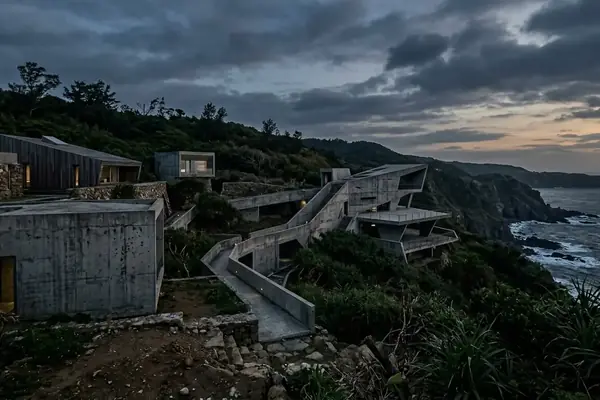
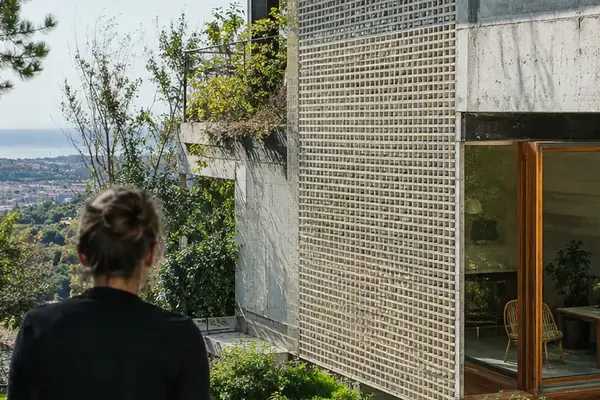
The Next-Gene 20 project aligns directly with the ecological environment and cultural enhancement pillars. Twenty distinct ecological villas replace an earlier monolithic scheme. Each villa functions as an independent trial site for renewal tactics.
Plot development timelines, from general figures, range from 18 to 22 months. This compressed schedule mirrors the municipal window while allowing rapid iteration on water management and planting strategies. The villas demonstrate how academic concepts about ecological performance translate into measurable site outcomes.
Comparative analysis shows that distributed villa clusters outperform centralized complexes when the goal is to test multiple ecological variables simultaneously. Each unit can adopt different retention or treatment approaches without affecting neighbors.
Implementing Sponge City and Plant-Network Integration
Sponge City measures applied at the villa scale address localized runoff. Retention capacity for 48 to 72 hours of peak monsoon runoff, according to common estimates, depends on soil permeability and planting depth. Variation in these requirements appears across adjacent plots even within the same district.
The Plant-Network Integration model handles sewage at the individual plot level. Connecting every villa to the aging municipal grid would exceed local capacity during peak periods. Decentralized treatment units therefore operate in parallel with the larger system.
Architects and developers can align individual projects with the 2021-2025 goals by embedding these two strategies from the schematic phase onward. The villas become reference cases rather than exceptions.