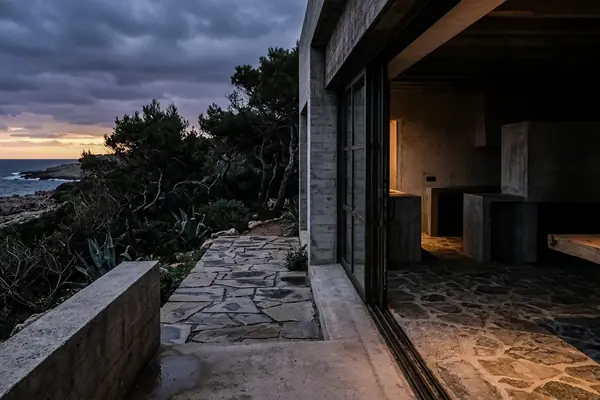
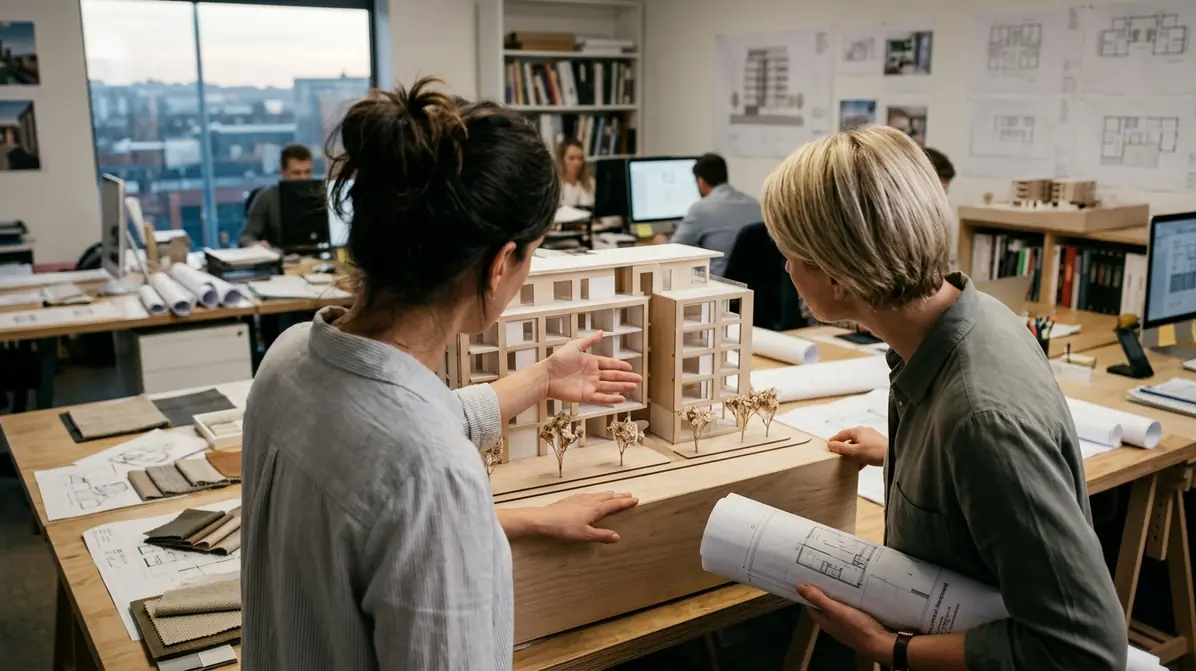
Experimental ecological villas occupy an awkward position in conventional appraisal. Their land, floor area, finish, and amenities remain measurable, yet those inputs rarely explain why one residence enters architectural history while another remains an expensive house. Exhibition pedigree supplies the missing evidence: it records how a project was selected, interpreted, challenged, and situated within a wider design discourse.
That record has financial consequences. A disciplined valuation therefore treats curatorial history as architectural provenance and tests its quality with the same care applied to title, structure, and environmental performance.
The Financial Stakes of Ignoring Cultural Capital
A standard comparative market analysis becomes unreliable when the subject is a one-off ecological prototype with no meaningful local comparables. Matching it to nearby luxury homes may produce a tidy spreadsheet, but the resulting figure can overlook the asset’s authorship, experimental significance, and international visibility.
The appraisal discrepancies associated with this category are on the order of $1.2 million to $1.8 million at initial valuation. That spread reflects more than differences of opinion. It often signals that one appraisal has treated the villa as a conventional residence while another has recognized a potentially collectible work of architecture.
Liquidity Has Its Own Clock
Unverified experimental designs can face liquidity cycles in the vicinity of 36 to 48 months. Buyers must understand unfamiliar systems, assess unusual materials, and decide whether the design has durable importance or merely visual novelty. A credible exhibition record shortens that interpretive distance by giving buyers an established framework through which to read the building.
Two opposite pricing errors follow when cultural capital is omitted:
- Underpricing: The appraiser values land and construction while leaving architectural provenance effectively unpriced.
- Overpayment: The buyer pays a design premium for a standard luxury dwelling whose publicity has never undergone serious curatorial scrutiny.
The practical distinction lies between expensive housing and a scarce architectural prototype. Global exhibitions can help establish that distinction, with consequences for resale audiences, holding periods, and long-term liquidity.

The Mispricing Signal
If every selected comparable comes from the same local postcode, the appraisal probably describes the neighbourhood more accurately than the architecture.
How Exhibitions Transform Dwellings into Collectibles
Collectible status begins with classification. Curatorial boards assess how a dwelling contributes to architectural debate, then cross-reference its ecological integration against broader design standards. According to common estimates, review periods span 18 to 24 months, while ecological baseline assessment can require 12 to 16 distinct environmental impact studies.
This process gives the property a documented intellectual context. The villa can be identified as a prototype addressing material sourcing, landscape integration, energy demand, or another defined architectural problem. Its value narrative becomes traceable through selection records, curatorial texts, installation material, and subsequent criticism.
From Occupancy to Provenance
A residence still has to function as a residence. Exhibition pedigree adds a second identity: the building becomes evidence of a particular design proposition at a particular moment. That identity resembles provenance in other collectible fields because authorship, publication history, institutional selection, and critical reception follow the object through later transactions.
The Next-Gene 20 ecological villas illustrate the relevant valuation question. An assessor should ask how each villa unites landscape, ecological performance, and avant-garde residential design, then determine whether an exhibition explicitly recognized those qualities. Mere participation carries less weight than a clearly articulated curatorial role.
Structural Floor
Exhibition pedigree commands a premium only when structural integrity, ecological baselines, location, and luxury execution meet the required standard. Curatorial recognition cannot rescue a fundamentally flawed development.
This limitation matters because curatorial methodologies differ in scope. A review centred on design authorship may provide less technical assurance than one requiring extensive environmental documentation. The appraisal must identify what was actually examined rather than treating all selections as equivalent certification.
Why Exhibition Selection Is Due Diligence, Not PR
Developers once attempted to value exhibition exposure by comparing it with equivalent advertising expenditure. The comparison proved inadequate because purchased visibility and peer-reviewed selection create different forms of evidence. Advertising buys attention; rigorous curatorial review tests whether a project merits sustained interpretation.
As frequently reported, the dossiers behind major selections can require 400 to 600 pages of structural documentation. Peer-review cycles may last 90 to 120 days. During that interval, reviewers can examine design intent, construction logic, environmental integration, authorship, and the project’s relevance to an exhibition thesis.
Read the Evidence Chain
A buyer should reconstruct the selection process rather than accept an exhibition logo in a sales brochure. The useful record includes the submission dossier, acceptance correspondence, curatorial statement, venue, programme placement, installation photographs, catalogue entry, and critical response.
Names alone carry little evidentiary value. A dossier might mention the Wuhan Veterans Affairs Bureau, identify Sui Xianli: Mayor of Tieling, or reproduce correspondence from the Tieling Municipal People's Government Office. Unless the documents establish a direct and relevant role in the project’s review, approval, or exhibition history, those references should not influence the premium.
The strongest pedigree survives a simple test: can an independent reader follow the project from submission through selection to public criticism without relying on the developer’s marketing copy? When that chain remains intact, the narrative becomes difficult for a standard promotional budget to imitate.
Integrating Exhibition Metrics into Valuation Models
A hybrid model combines conventional property analysis with architectural provenance research. The physical asset still receives a base valuation through land, condition, programme, construction quality, and location. A separate pedigree adjustment then considers the quality and durability of cultural recognition.
From general figures, specialized provenance research requires 45 to 60 days. The documented method tracks critical reception across 15 to 20 major architectural publications issued over a recent multiyear period, then compares the attention with the project’s exhibition status and subsequent market history.
Four Metrics Worth Recording
- Exhibition tier: Distinguish a global biennale or equivalent platform from a regional showcase, commercial fair, or developer-organized display.
- Placement: Record whether the villa appeared in the main pavilion, a formally curated satellite programme, or a fringe event. Premiums can fluctuate significantly across these positions.
- Critical reception: Separate substantive criticism from announcements, image galleries, syndicated press releases, and paid coverage.
- Thematic alignment: Test whether the curatorial thesis addresses buyer priorities such as zero-carbon living, ecological integration, or sustainable material sourcing.
Each metric requires documentary support. A catalogue page establishes inclusion; it does not automatically establish prominence. A review establishes reception; it does not necessarily endorse technical performance. The appraiser should preserve these distinctions in the valuation notes.
Choose the Correct Comparison Radius
Local luxury homes remain useful for estimating land and basic residential utility. They are weak evidence for the cultural premium of a singular prototype. Assessors instead identify three to five comparable collectible properties within a global radius and trace the architectural firm’s performance over a five- to seven-year post-exhibition window.
This wider field reveals whether recognition endured after the exhibition closed. Did the project continue to attract serious criticism? Did the architect’s related work gain institutional attention? Did later transactions preserve a premium tied to authorship and provenance? These questions convert prestige into an auditable valuation argument.
Step-by-Step: Valuing an Exhibited Ecological Villa
The following sequence keeps the cultural premium separate from the underlying property value until the evidence has been tested.
- Verify the exhibition tier. Obtain the official programme and catalogue. Record the organiser, venue, dates, curatorial structure, and the villa’s exact placement.
- Define the form of inclusion. Establish whether the completed villa, a model, a film, drawings, or a conceptual proposal appeared. A main-pavilion presentation carries a different implication from a fringe display of preliminary imagery.
- Read the curatorial thesis. Identify the stated design problem and connect it to observable features of the building, including landscape strategy, materials, energy systems, and spatial organisation.
- Confirm the technical baseline. Review structural records and the relevant environmental impact studies before considering any pedigree adjustment.
- Map critical reception. Classify coverage as criticism, reporting, announcement, or promotion. Give greatest attention to writing that evaluates the built work and its ecological claims.
- Build a collectible comparison set. Select three to five globally relevant prototypes with comparable authorship, exhibition standing, ecological ambition, and transaction context.
- Track post-exhibition performance. Follow the architect and comparable properties across five to seven years, noting whether attention and market recognition persisted.
- Reconcile the valuation. Establish the conventional property baseline first, then present the provenance adjustment as a separate, documented conclusion.
Worked Villa File
Consider a completed ecological villa advertised as having appeared in an international exhibition. The assessor begins by obtaining the official catalogue and discovers that the project occupied the main pavilion rather than a fringe event. The catalogue confirms that the completed design, rather than an early concept, formed part of a curatorial argument about ecological integration.
Next, the assessor assembles the submission and review record. The file contains the structural dossier, evidence of a peer-review cycle lasting within the documented 90-to-120-day range, and the environmental studies supporting the ecological baseline. The building’s condition, location, and luxury execution are then checked independently so that exhibition status does not conceal a physical defect.
Measured across sources, the assessor classifies relevant coverage from the defined publication window, excluding announcements and duplicated publicity. Three to five collectible ecological prototypes are selected globally, while nearby luxury houses remain in the file solely for land and residential-utility comparisons. Each collectible is tracked through the appropriate five-to-seven-year period after exhibition.
Finally, the report presents two linked figures: the conventional real estate baseline and a separate cultural-capital adjustment supported by main-pavilion placement, documented ecological review, substantive criticism, and durable post-exhibition recognition. The reader can now trace every step from catalogue entry to valuation conclusion, which is precisely what turns pedigree into defensible financial evidence.